

Zwift has handed Roy Knickman one of the loudest jobs in cycling: take a brand-new North American under-19 team, built with Canyon and Pedal Mafia, and use it to put a North American rider on the top step of the Tour de France podium inside ten years. No pressure.
But, is he the right man for job? Even more than that, is the worry people that are reaching is the right worry. Will a director sitting in California be reduced to judging teenagers on power files he can’t verify in person.
On paper, there was never anyone else


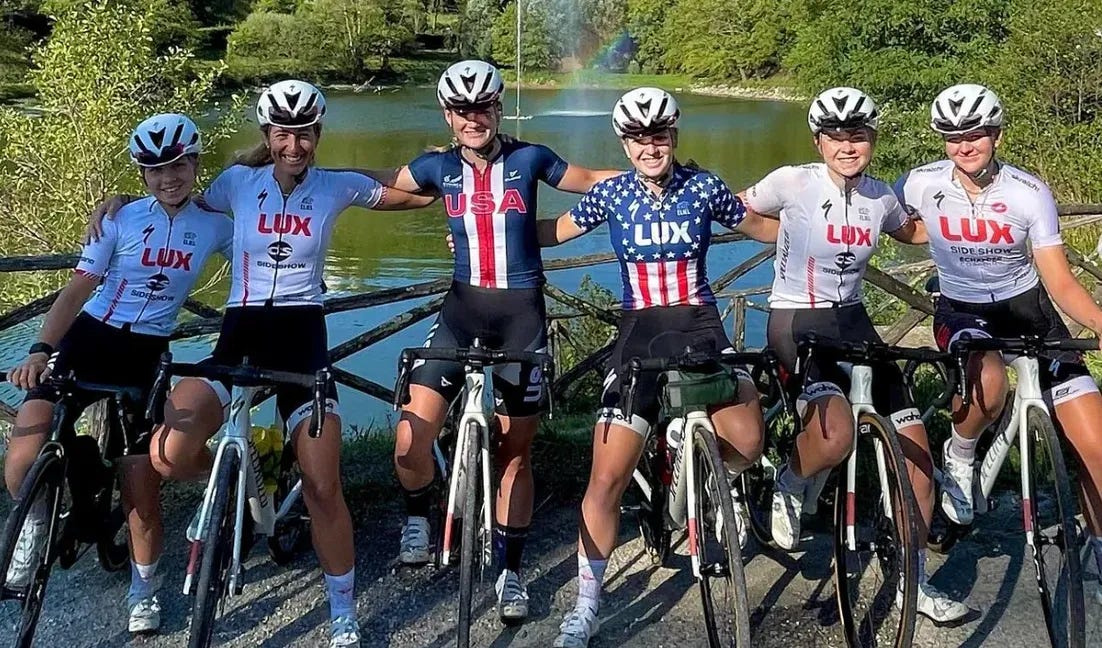
Let’s start with the case for him, because it’s strong enough that Eric Min says he didn’t phone a second candidate. As a nineteen-year-old, Knickman helped take 3rd in Men’s Team Time Trial at the 1984 Summer Olympics. He raced at the top with La Vie Claire alongside Greg LeMond, then Toshiba-Look and 7-Eleven. He went on to coach the US national and Olympic road programs in the nineties, and then spent the better part of a decade running LUX, the best junior development team the United States has produced this century. The proof isn’t a mission statement; it’s a start list. Brandon McNulty, Quinn Simmons, Kevin Vermaerke, Kaia Schmid, and Makayla Macpherson all came through LUX with McNulty, Simmons and Vermaerke lining up at the 2022 Tour de France. If the brief is “develop North American teenagers into Tour-quality professionals,” there is a very short list of people in this space who have actually done it, and Knickman is at the top of that list.
So the pedigree isn’t in question. The interesting stuff is everything around it.
The numbers worry is the wrong worry
The obvious assumption is that because this is a Zwift team, talent will be picked the Zwift way - by the numbers - and that a coach who may not be able see most of his prospects in the flesh will be stuck trusting a spreadsheet. There are two problems with that.
First, this isn’t Zwift Academy. It’s a real racing team and the assumption is that riders will be at camps, in team cars, and in actual bunchies from 2027. In-person assessment isn’t a luxury this program might struggle to afford, it’s the entire operating model. Knickman will see these kids race, repeatedly, under fatigue, in the wet, in a crosswind. That’s the job.
Second, and more importantly, “Mr Motivation” is on record as one of the least numbers-besotted coaches in the sport. Ask him how he found talent at LUX and he doesn’t lead with peak power. He talks about the size of the engine, and then immediately follows up with how a rider rides, their style, their mentality, how hard they train, and the context around their results. He’s pointed out that some of his best riders were never the big-numbers kids, and that a fourth place earned with no coach and bad equipment can tell you more than a win bought with every advantage. That is the opposite of a man who needs a power file to recognise a future pro.
The real take here is that Zwift didn’t hire a data company’s idea of a talent scout. It hired a craftsman who reads riders the old school way, and that’s a feature, not a bug. So the real challenges must lie somewhere else, right?
The actual tension: a racecraft man inside a data company
The genuine question isn’t whether Knickman can do development. It’s whether a data-centric tech company can resist managing it like a data problem.

Its fair to say that Zwift’s whole instinct will be to quantify, funnel and optimise. Knickman’s whole method is slower, more human and harder to put on a web dashboard - time in Europe, distance in the legs, character under pressure, the patience to let a fifteen-year-old become a twenty-three-year-old without panicking. Those two cultures can absolutely coexist, but only if the parent company stands back and lets the developer develop. The failure mode isn’t Knickman judging kids by their watts; it’s a quarterly-results mindset leaning on a man whose craft doesn’t move on quarterly timelines.
Then theres the age problem to consider as well, one that butts up against Zwift’s own platform as the discovery engine: Zwift no longer accepts riders under sixteen. The program is targeting under-19s, some of them fifteen (Knickman started as a fourteen-year-old junior) which are ages that the platform itself now turns away. So the obvious “find them online” is partly bolted shut by Zwift’s own rules, which means identification across the US, Canada and Mexico will have to happen the unglamorous, in-person, boots-on-the-ground way. Which, again, is Knickman’s way. Ironically, the man fits the problem better than the platform does.
Ten years is the part that should scare everyone
If there’s a place to be sceptical, it isn’t the hire or the talent. It’s the deadline.
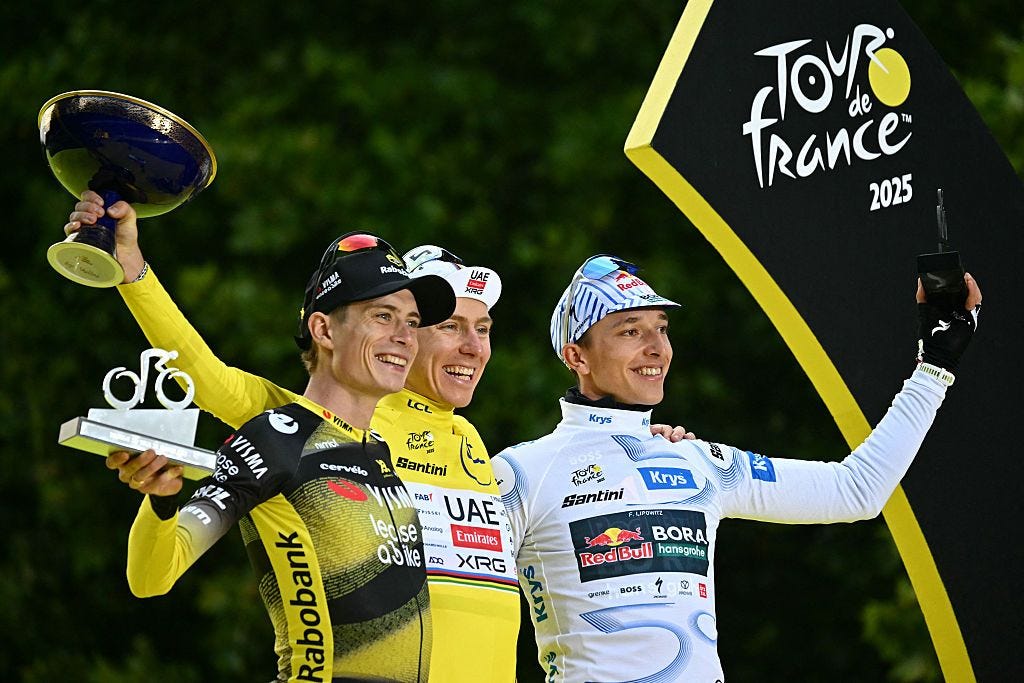
Developing WorldTour professionals, which LUX demonstrably did, is not the same thing as manufacturing a Tour de France podium finisher to a schedule. One is a repeatable process. The other needs that process and a generational engine and a decade of health, luck, team support and rivals who don’t happen to be Tadej Pogačar in his prime. You cannot project-manage a yellow-jersey contender into existence the way you’d ship a product feature, and anyone promising it within a fixed window is writing a cheque that physiology may decline to cash.
And here’s the irony Knickman knows better than anyone: LUX, for all its success, still died. Not from a lack of talent but from a lack of money. It folded at the end of 2022 because junior programs live and die on year-to-year funding that almost never holds.
However, this might be the silver lining and the smartest thing about this new project. It’s being anchored by a foundation and an endowment, with long-term backing from Zwift and private donors, specifically engineered to remove the funding cliff that killed his last team. Time and money are the two things development always runs out of. In theory, this program has both. Whether ten years is long enough to convert them into a champion is the big question, but at least the man chasing it won’t be doing it with one eye on whether the lights stay on.

The verdict
On paper, Knickman is the right appointment, and the power-numbers anxiety is largely a category error: he’s the cure for that disease, not a carrier of it. The risks worth watching are different and bigger, whether a fixed ten-year deadline is honest about how champions are actually made, and whether a data-first company can hold its nerve and let an old-school developer work at developer speed.
Put simply: I’d bet on the man. I’m just not sure anyone should bet on the timeline.