

Zwift bought Rouvy. Before that, Rouvy bought FulGaz. Before that, Rouvy bought Bkool. Follow the chain and you arrive at an uncomfortable picture: a huge chunk of the “real-world routes” side of indoor cycling now sits under one roof, and that roof belongs to the platform that already dominated the gamified side of virtual cycling. Zwift, valued north of a billion dollars, is now the closest thing this little corner of the fitness world has to a monopoly.
That’s not necessarily a disaster. Zwift makes a genuinely good product and the cross-compatibility wins are real. But anyone who’s watched a market consolidate knows what tends to follow: less pressure to innovate, fewer reasons to keep prices sharp, and a slow narrowing of choice. The thing that keeps a dominant player honest is viable competition, so it’s worth knowing exactly who’s still standing on their own two wheels.
Here are the independents that haven’t been absorbed, and who each one is actually for.
Biketerra: the indie that actually gets it
Biketerra is the scrappy underdog worth rooting for. Built by a small team, it’s browser-based , so no chunky install, just open a tab and go. Its whole pitch is freedom: upload any real-world route as a GPX file and it generates the 3D terrain, land cover, water and buildings from real data, then lets you ride it with an accurate physics simulation and minimal gamification.
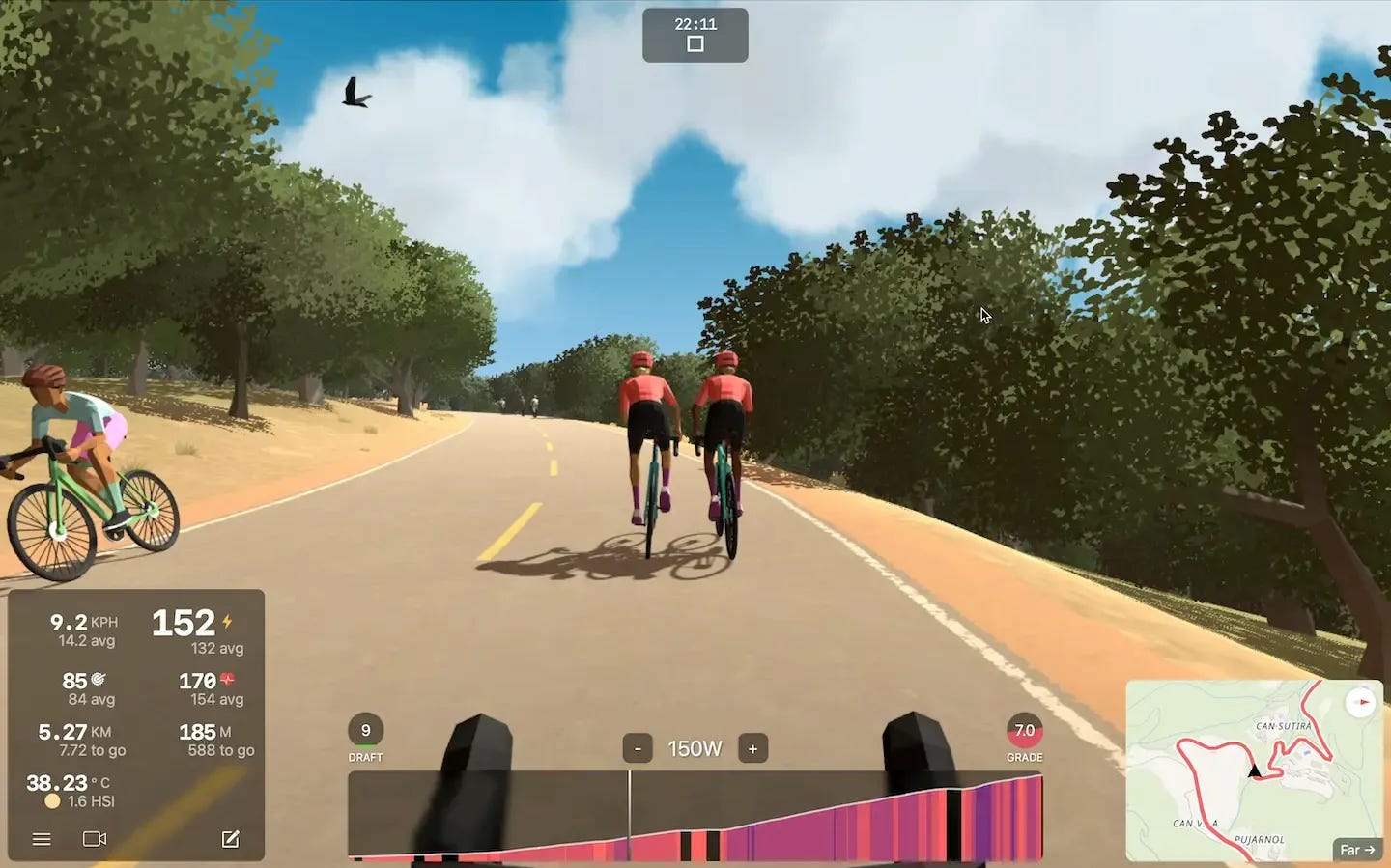
That “minimal gamification” bit is the key. Where Zwift wants to entertain you with power-ups, route-badges and April foolsday nonesense, Biketerra wants to get out of the way and just give you a faithful ride with ERG, SIM, virtual shifting and HR-to-power modes, optional pacer bots, and one-click loading of .ZWO workouts or sessions from Intervals, TrainerDay and Athletica. It runs on Windows, Mac, Linux, iOS and Android, and the subscription is cheap by category standards (there’s a free tier to start). For the rider who finds Watopia a bit much and just wants real roads and honest physics, it’s a breath of fresh air.
Best for: purists, data nerds, and anyone who wants to ride real routes without the video-game layer.
TrainingPeaks Virtual: realism plus the training brain
TrainingPeaks Virtual (Indivelo for those that remember before Training Peaks acquired it) has quietly become one of the most credible alternatives, pairing some of the most realistic ride physics in the category with the planning and analysis ecosystem TrainingPeaks is known for. It’s bundled in with a TrainingPeaks Premium subscription, so if you already live in TP for your structured training, you essentially get the virtual platform thrown in. Planned workouts sync straight to the ride and the completed data flows back, FTP and all.
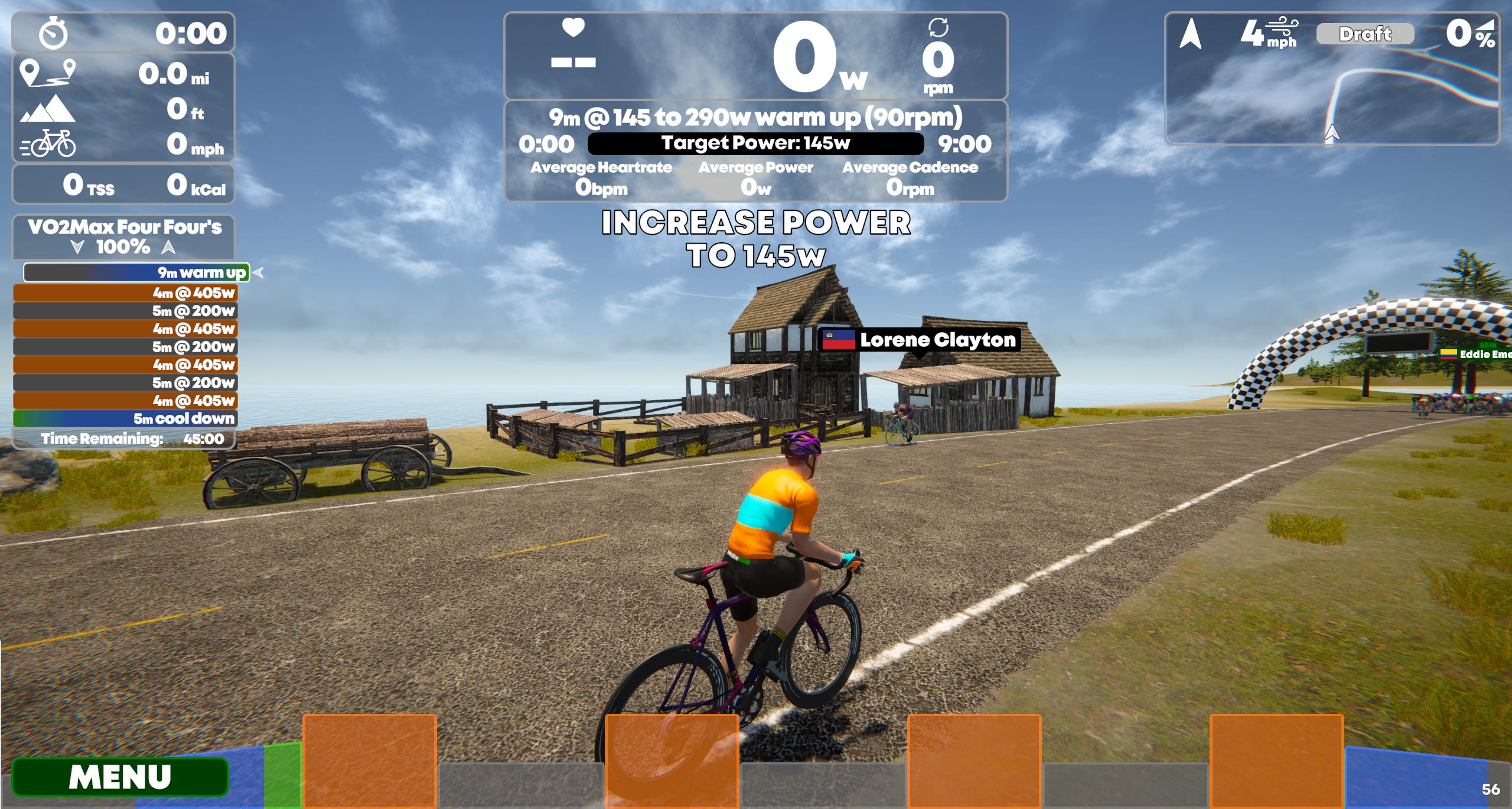
Best for: structured athletes already invested in TrainingPeaks who want indoor riding and analytics under one login.
The structured-training camp: Wahoo SYSTM and TrainerRoad
Not every alternative is a virtual world, can be the point. Wahoo SYSTM (the evolution of The Sufferfest) and TrainerRoad come at indoor riding from the opposite direction - no avatars, no scenery, just science-led structured training designed to make you faster. They’re not trying to beat Zwift at immersion; they’re betting that a lot of riders care more about the workout than the world it’s painted on. For time-crunched riders chasing FTP gains, they remain genuinely excellent.


Best for: riders who care about getting fitter more than where their avatar is pedalling.
MyWhoosh: the well-funded challenger
If anyone has the resources to go toe-to-toe with Zwift, it’s MyWhoosh. Founded in Abu Dhabi and funded out of the UAE, it’s completely free to use, which on its own makes it the most disruptive thing in the space. It offers virtual worlds, structured training plans, hundreds of workouts, and a serious racing calendar including the $1m MyWhoosh Championships in July.

The catch is that the funding model is also the strategy: this is a platform underwritten as a national soft-power and marketing play, not a business that has to turn a profit from your wallet. For riders, though, that’s mostly upside, pro-sized prize money, equal pay for women, and a price tag of nothing. If you race and you haven’t tried it, you’re leaving value on the table.
Best for: racers and budget-conscious riders who want a full-featured platform without a subscription.
Why this matters
You don’t have to leave Zwift to care about this. Even committed Zwifters benefit from a market where MyWhoosh is giving the product away, Biketerra is quietly nailing real-route physics, and TrainingPeaks is bundling realism into a training suite. Competition is the reason your subscription doesn’t quietly creep up every year and the reason features keep landing. The single healthiest habit you can build as an indoor rider is knowing your options and most of these will cost you nothing to try.
The map of indoor cycling now has one very big country in the middle of it. The independents around the edges are what keep the whole thing worth riding. Spin up a free trial on one of them this winter and see what you’ve been missing.