

When Zwift announced it had bought Rouvy back in April, the press release came pre-loaded with reassurances. Two companies, two roadmaps, two subscriptions, same team, same focus. Petr Samek stays on as CEO. Nothing changes for you, the rider. The line everyone quoted was Samek promising it would stay the “Rouvy you all know and love”.
It was exactly what you’d expect a freshly-acquired founder to say, and exactly what a sceptical community was never going to take at face value. The Road.cc and DC Rainmaker comment sections filled up with the usual, and not unreasonable, fears: one step closer to a monopoly, fewer real choices, price rise incoming. In an industry that has watched plenty of “nothing will change” acquisitions quietly become “everything changed,” that cynicism is justified.
So now, nearly two months on, it’s fair to ask the question that actually matters: are Zwift and Rouvy doing what they said they’d do?
What was actually promised
Let’s be precise about it, the two companies committed to a handful of concrete things from day one:
Independent operation. Rouvy continues as a standalone platform with its own roadmap, team, and leadership, with Samek remaining CEO.
Separate subscriptions. No merged apps, no combined Zwift-Rouvy bundle, and existing Rouvy subscriptions (loyalty discounts and pausing included) left untouched.
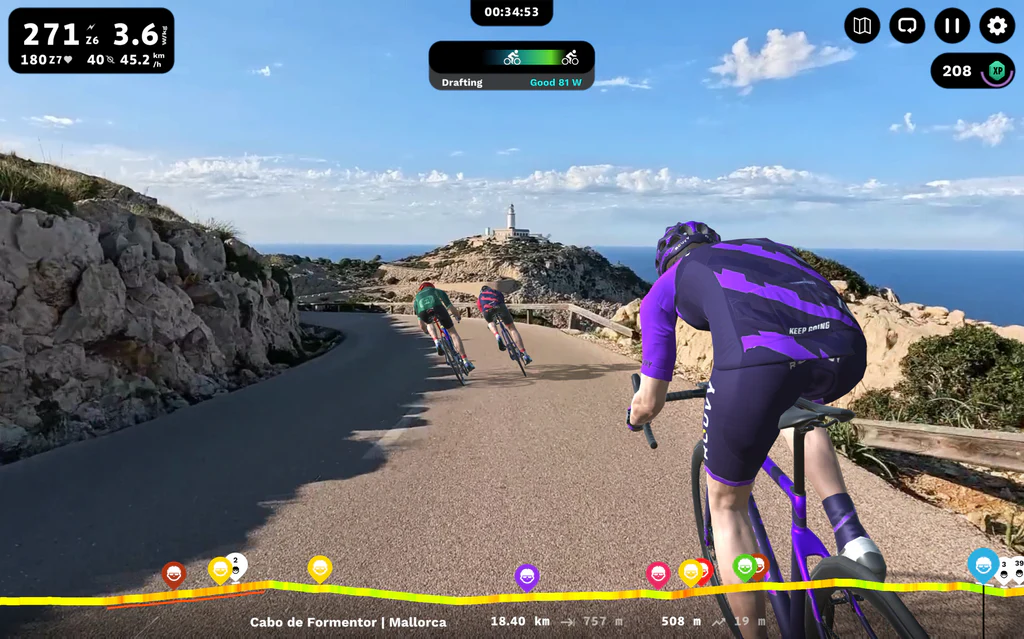
Real routes remain core. Rouvy’s whole identity, the real-world video experience, is preserved rather than absorbed into Watopia-style animation.
Hardware compatibility, immediately. From day one, Zwift ready trainers and the Zwift Ride smart frame would work with Rouvy, with Zwift Click V2 previously unsupported, finally playing nice too.
More to come. “Further updates planned over the coming months” was the catch-all statement that deserved further scrutiny.
That last point is the one to watch, because it’s where intentions either turn into shipped features or quietly disappear.
What’s actually shipped since
Here’s where it gets interesting, because Rouvy hasn’t gone quiet. If anything, the platform has been busier in the last two months than a lot of independent apps are in a good quarter.
The hardware promise landed on launch day. That long-standing bugbear of owning Zwift kit and not being able to use it properly on Rouvy was resolved at the same time of the announcement, with remote device configuration flagged as a follow-up. That’s the clearest example of a promise made and immediately kept, and it’s the one that materially benefits riders who own both (well mostly Rouvy).
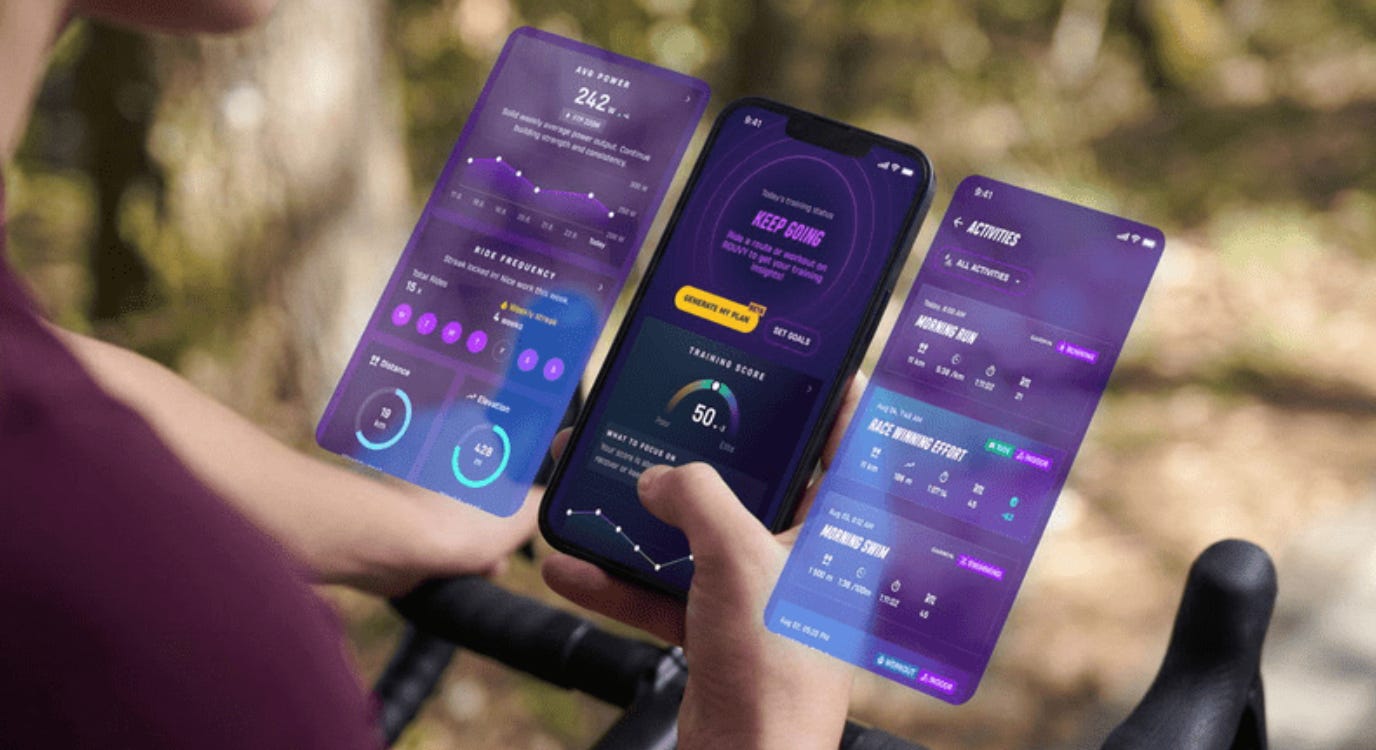
Then came Companion App 2.0 on 19 May. This is a genuinely substantial release: a redesigned companion that pulls in not just indoor rides but logged outdoor activity and cross-training including running, swimming, and strength with Garmin integration for training load, readiness scoring, and the ability to push structured Rouvy workouts out to a Garmin head unit for outdoor execution. Crucially, this is Rouvy’s vision of connecting indoor and outdoor training, and not just a bolted-on Zwift feature. It feels as if the roadmap survived intact post aquisition.
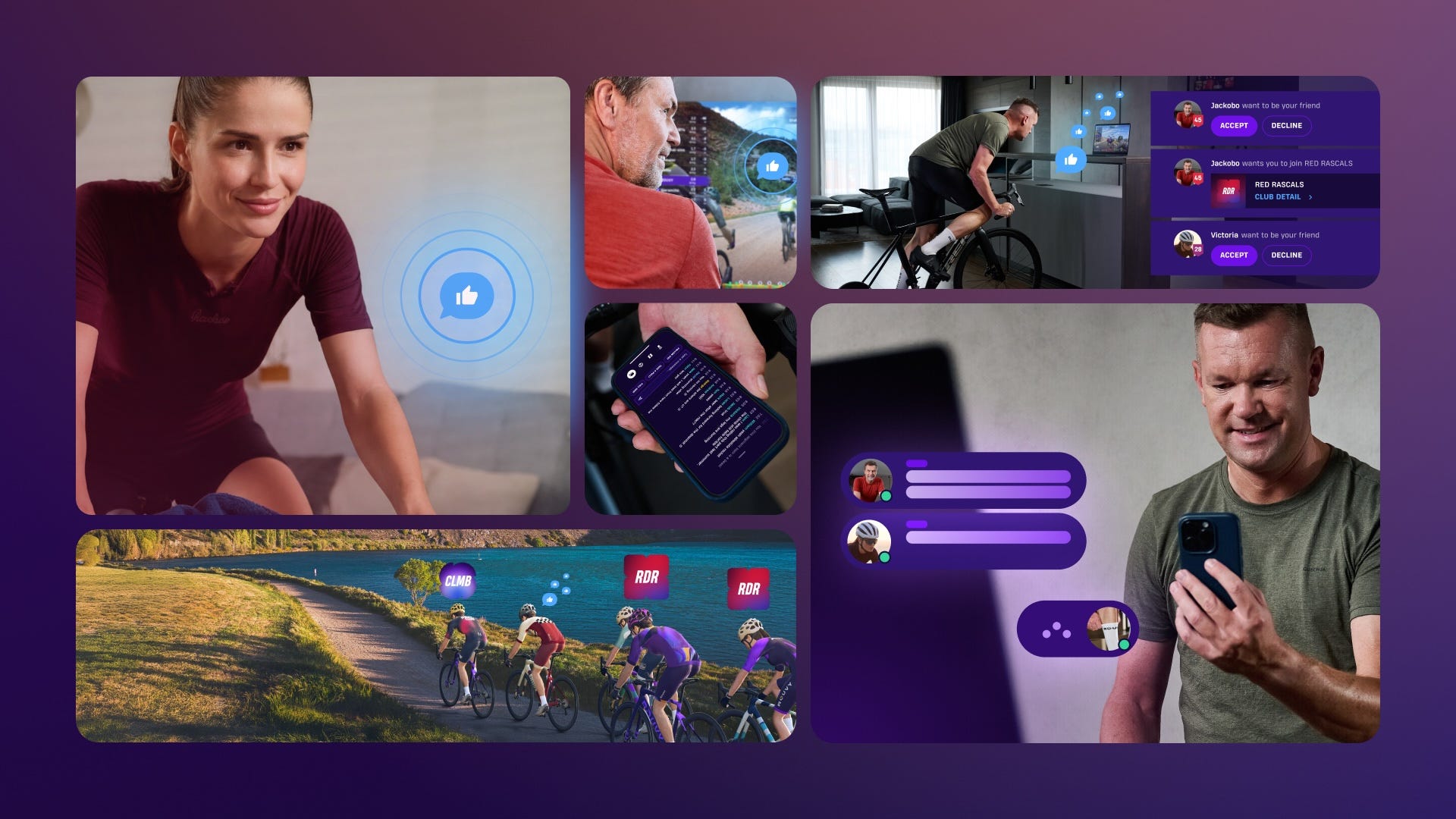
Most recently, on 16 June, Rouvy switched on Clubs, Communities and In-Ride Chat, its first serious move into the social and group-riding layer that Zwift has offered for years. You could be forgiven for being cynical and thinking that Rouvy borrowing that from its new owener’s playbook, but the more honest appraisal should be that Rouvy is finally addressing its own most-requested features, on its own terms, with its own branding.
So, is this the proof?
For now, cautiously you could say yes, this looks like the first real evidence that the acquisition promises weren’t just PR hype.
However, the tell isn’t any single feature. It’s the pattern. Three separate, substantive releases in under two months: hardware compatibility, a rebuilt companion app, and a social layer. This is not what a platform looks like when it’s being quietly mothballed or folded into its acquirer. It’s what an independent roadmap looks like when it’s still being executed. The subscription has stayed separate, the team and CEO are still intact, and the “real-routes” identity hasn’t been diluted by a single Watopian pixel.
But, and it’s an important but, let’s not hand out medals just yet. Two months is the honeymoon. The genuinely hard promises in any acquisition aren’t tested in the first quarter; they’re tested in year one and two, when the strategic logic of why you buy a competitor starts to make an appearance. The features shipped so far were almost certainly already in Rouvy’s pipeline before the handshakes were handed out, which makes them proof of continuity rather than proof of a healthy new arrangement. The real test is the first roadmap decision that gets made because of the acquisition, not in spite of it. And the question of whether “differentiated roadmaps” eventually means “deliberately kept apart” or “slowly converged” is a question only time answers.
There’s also the elephant that no feature release makes smaller: with Rouvy in the fold, Zwift’s dominance over indoor cycling is now near-total, and the competitive pressure that keeps any company honest now rests largely on MyWhoosh’s shoulders. Promises kept to riders and good outcomes for the market aren’t neccessarily the same thing.
The verdict
For now, I think we should give credit where it’s due. Zwift and Rouvy said the platform would keep shipping as itself, and for two months they have honoured this, visibly, repeatedly, and with its own voice. If you’re a Rouvy rider, the early signs are about as good as you could reasonably hope for.
However, the promises that are easy to keep have been kept. The ones that are hard to keep haven’t come due yet.