

Jonas Vingegaard lost the yellow jersey on Monday (which he admits is a shame), but if the coverage is anything to go by, you’d think he lost the Tour de France with it.
He didn’t. The panic button everyone’s reaching for isn’t wired to anything.
What actually happened on stage 3
The finish at Les Angles was a 1.7km climb at 6.5%, and calling it a climb is generous. It’s the kind of uphill drag that any decent club rider could hold a big-ring gear on. This wasn’t a mountain test. It was a power sprint with a gradient, at the end of a long, hot 196km day through the Pyrenean foothills.
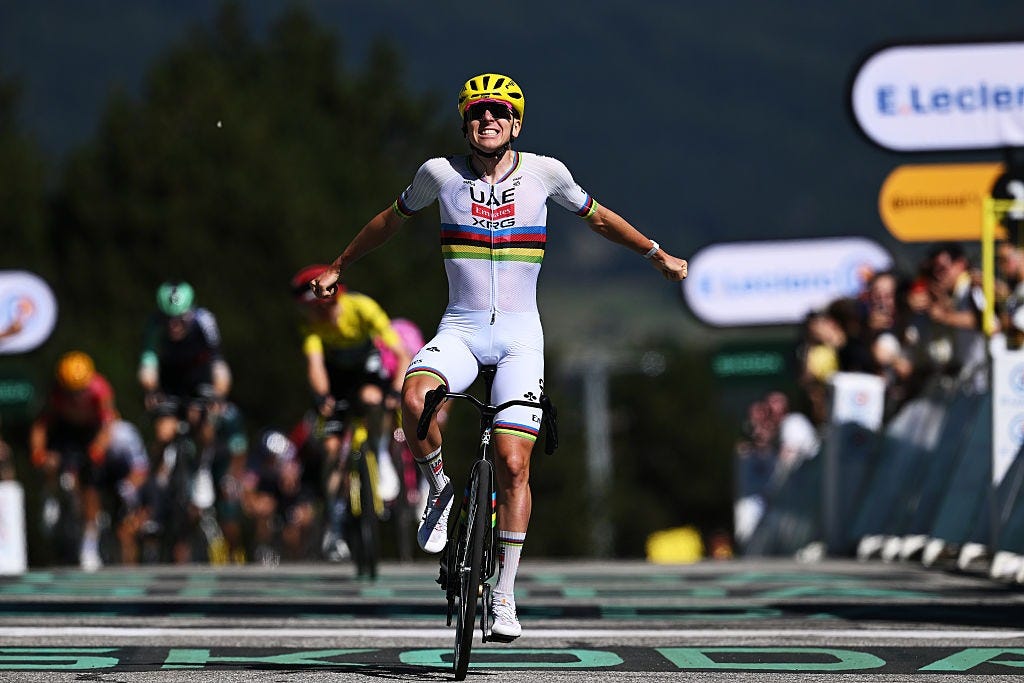
And a power sprint with a gradient is just about the single most Pogačar-shaped finish that exists in professional cycling. Add a full UAE leadout with five riders controlling the front, then stage 2 winner Isaac del Toro dragging the group at full gas until 300 metres out and you’ve built a laboratory-perfect scenario for the world champion’s kick.
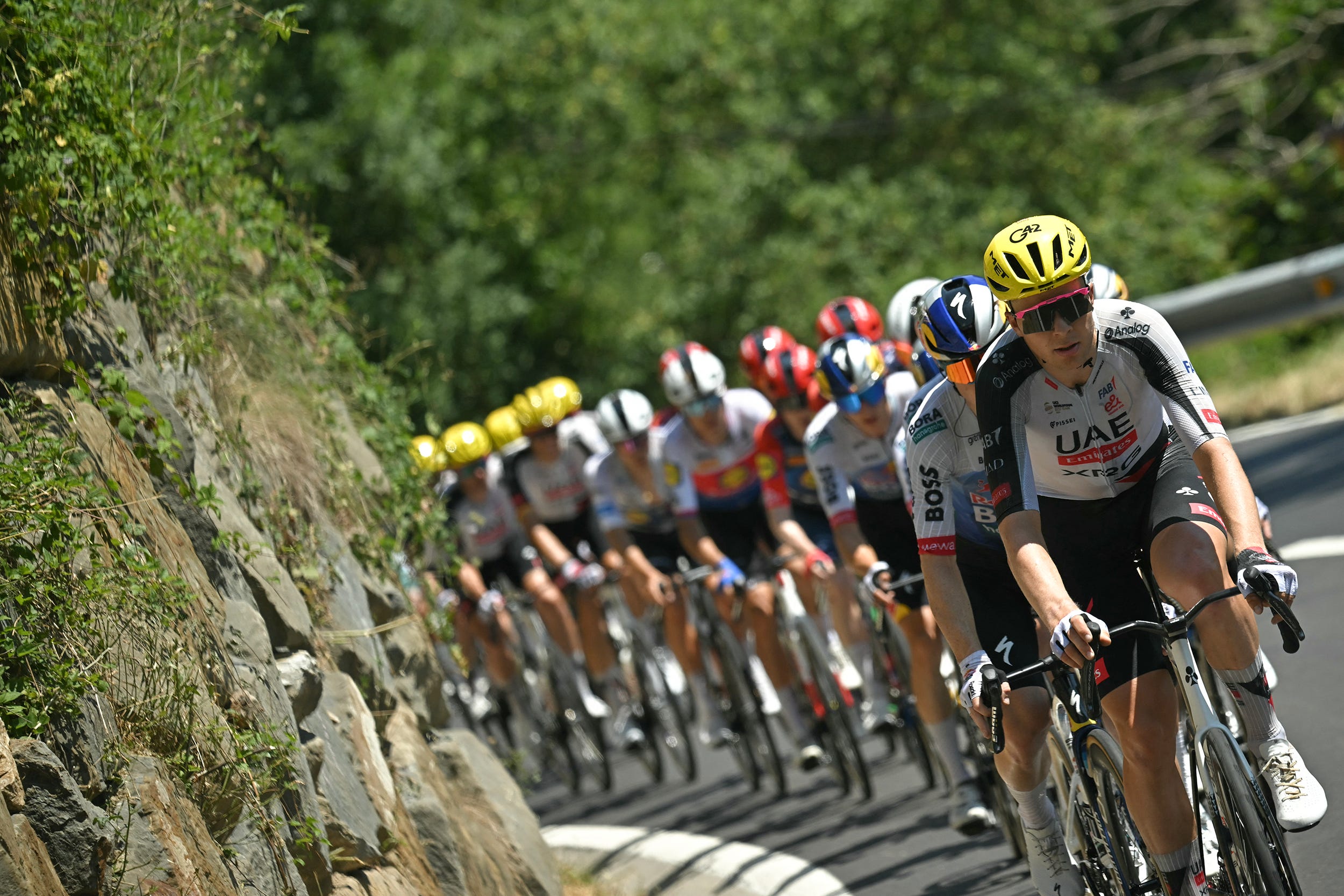
Vingegaard’s response to that scenario? He followed the wheel, held on through the acceleration, and conceded just two seconds at the line. Two. On the kind of finish that most exposes his one known weakness against Pogačar.
Then the bonus seconds washed out, and the GC reads: Pogačar 8:46:55, Vingegaard 8:46:55. Level. The jersey moved on a countback of stage placings - a tiebreaker rule, not a time gap. Vingegaard is exactly as close to winning this Tour as the man wearing yellow.
The pattern everyone’s forgetting
Here’s some history worth remembering before declaring any trend: Vingegaard losing small amounts of time to Pogačar in the punchy first week is not new. It’s the standard shape of every Tour these two have contested, including both of the ones Vingegaard won.
Vingegaard has never beaten Pogačar in a finish-line kick, and he’s never needed to. His Tours are won in the third week, at altitude, with sustained 20 to 30-minute efforts where Pogačar’s explosiveness ceases to be an advantage, and the pure aerobic engine takes over. Vingegaard’s campaign-level time on the clock after the first summit finish, having given up nothing but a sprint, is running exactly to script.
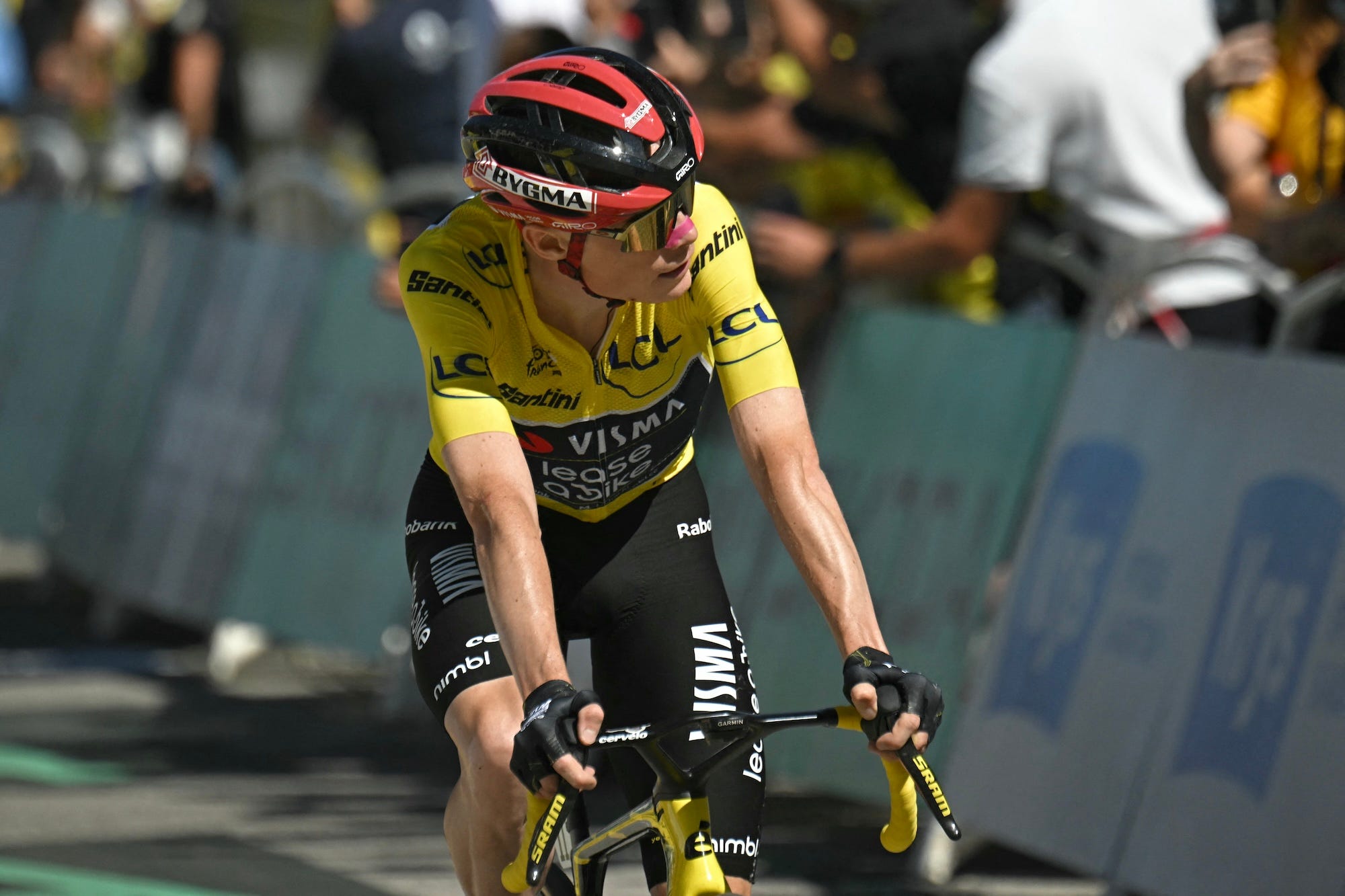
If anything, the position is better than the script. Visma won the team time trial. Vingegaard has worn yellow. His team put Sepp Kuss and Matteo Jorgenson on the front in the finale and looked organised. There is no crack to point at, no jour sans, no mechanical, no crash, no missed split. The worst anyone can honestly say is that he got outsprinted by the best puncheur-climber who has ever lived, on a puncheur’s finish.
The one thing worth keeping an eye on
However, honesty requires a caveat. Vingegaard looked less explosive than Pogačar in Stage 3’s finale, and it’s the second time in three days he’s come off worse in a direct kick. If that’s just Vingegaard being Vingegaard, fine; it’s priced in. If it’s a sign his top-end is further off than we expect, it narrows his path: he’d need every decisive moment of this Tour to be long and brutal rather than short and sharp, because in any close-quarters finish, Pogačar takes the seconds and the bonuses every single time.
That’s a real strategic problem. But it’s a problem for the later stages, not a verdict on stage 3.
The bottom line
The Tour de France has never once been decided on a category 3 drag in the first week, and it wasn’t on Monday either. Vingegaard is level on time with the defending champion, his team is functioning, and the terrain that decides this race, the terrain where he’s beaten Pogačar twice before, hasn’t appeared yet.
Losing a jersey on a countback isn’t a crisis. It’s barely news. Ask again after the first real mountain.