

The 2026 Tour de France rolls into ten first-time host sites: Tarragona, Granollers, Les Angles, Gavarnie-Gèdre, Hagetmau, Malemort, Ussel, the Circuit Nevers Magny-Cours, Plateau de Solaison and Thoiry. For each of them, the arrival of cycling’s travelling circus is either the best day of civic PR they’ll ever buy or an expensive lesson in what a fleeting spotlight actually costs. The honest answer to “blessing or curse?” is that it depends entirely on the town and these ten are at least four very different kinds.
First, the money
Nobody hosts the Tour for free. A French stage start costs a town somewhere in the region of €50,000 - €80,000, and a finish more like €80,000 - €120,000 and that registration fee is the cheap part. The real bill comes from the organisational load: closing and preparing roads, routing traffic, insurance, crowd barriers, medical and security cover. Those costs are frequently more than double the true outlay. When Digne-les-Bains1 hosted a finish, the all-in spend came to around €150,000.
Against that, the upside is genuine but conditional. Union Sport et Cycle estimates a host can see direct returns of up to five times the registration fee, and as much as half a million euros of extra activity across the month leading up to the day. Brittany’s 2021 Grand Départ2 cost roughly €2.3m of public money but pulled in 52,200 extra visitors and €4.35m in direct revenue. And the exposure value dwarfs all of it: one German host once valued its coverage at over €340m of advertising-equivalent worth against a fee of a few million. Billions of viewers across nearly 190 countries is a spotlight no small town could ever buy directly.
The word “conditional” is doing a lot of work there, though. Exposure only becomes euros if you have something to convert it with. That’s where the ten get seperated.
The safe bets: Tarragona and Granollers
The Catalan pair are the lowest-risk blessings on the list. Tarragona is a genuine tourist destination with Roman ruins, a coastline and the hotels to match and its exactly the kind of place that can turn a day of global television into next summer’s bookings. Granollers, on Barcelona’s doorstep, has the infrastructure and the metropolitan pull to absorb the crowds and bank the profile. For cities this size, a stage is a marketing deal with a near-guaranteed return. All blessing, no risk.


The high-reward gamble: Les Angles, Gavarnie-Gèdre and Plateau de Solaison
The mountain and ski stations are where the blessing is potentially the biggest and the effort the highest. A summit finish hands a resort the single most valuable asset in the whole broadcast: the helicopter “postcard,” minutes of sweeping aerial footage of its peaks beamed to the planet. For a destination trying to build its summer trade and fill winter beds, that’s tourism marketing you can’t put a price on.


But they pay the pricier finish fee, they wrestle with the hardest logistics of anyone with narrow access roads, altitude, weather and in Gavarnie-Gèdre’s case they’re operating inside a national park, with the associated access and environmental challenges. These towns will do very well out of 2026, but only if they’ve built a plan to catch the attention the cameras throw their way. High-reward, real work.
Between Efforts Podcast

The genuine gamble: Hagetmau, Malemort, Ussel and Thoiry
Here’s where the term “curse” can start to mean something. These small rural towns face a fee-plus-costs that is large relative to their modest municipal budgets, in exchange for what is essentially a single day party. The lasting economic return is uncertain, and the benefits skew heavily toward the intangible: a one-day windfall for the local cafés, campsites and bars; a galvanised army of volunteers; and the genuinely powerful but entirely unbankable feeling of having mattered when the world’s biggest race decided to pay a visit.


This is precisely the scenario that makes every town’s economist wince. The consensus on hosting big events is that the measurable impact is marginal at best and often negative, and that scepticism hits the hardest on the smallest hosts, who have the least capacity to convert a spike into something tangible. If you’re measuring purely in euros on a spreadsheet, these four are taking the biggest risk of the ten.


The outlier: Circuit Nevers Magny-Cours
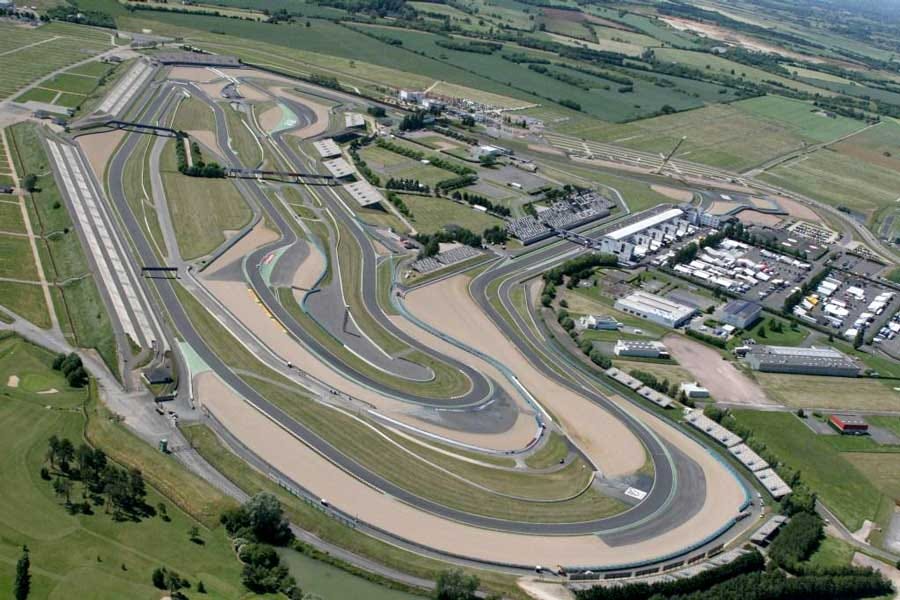
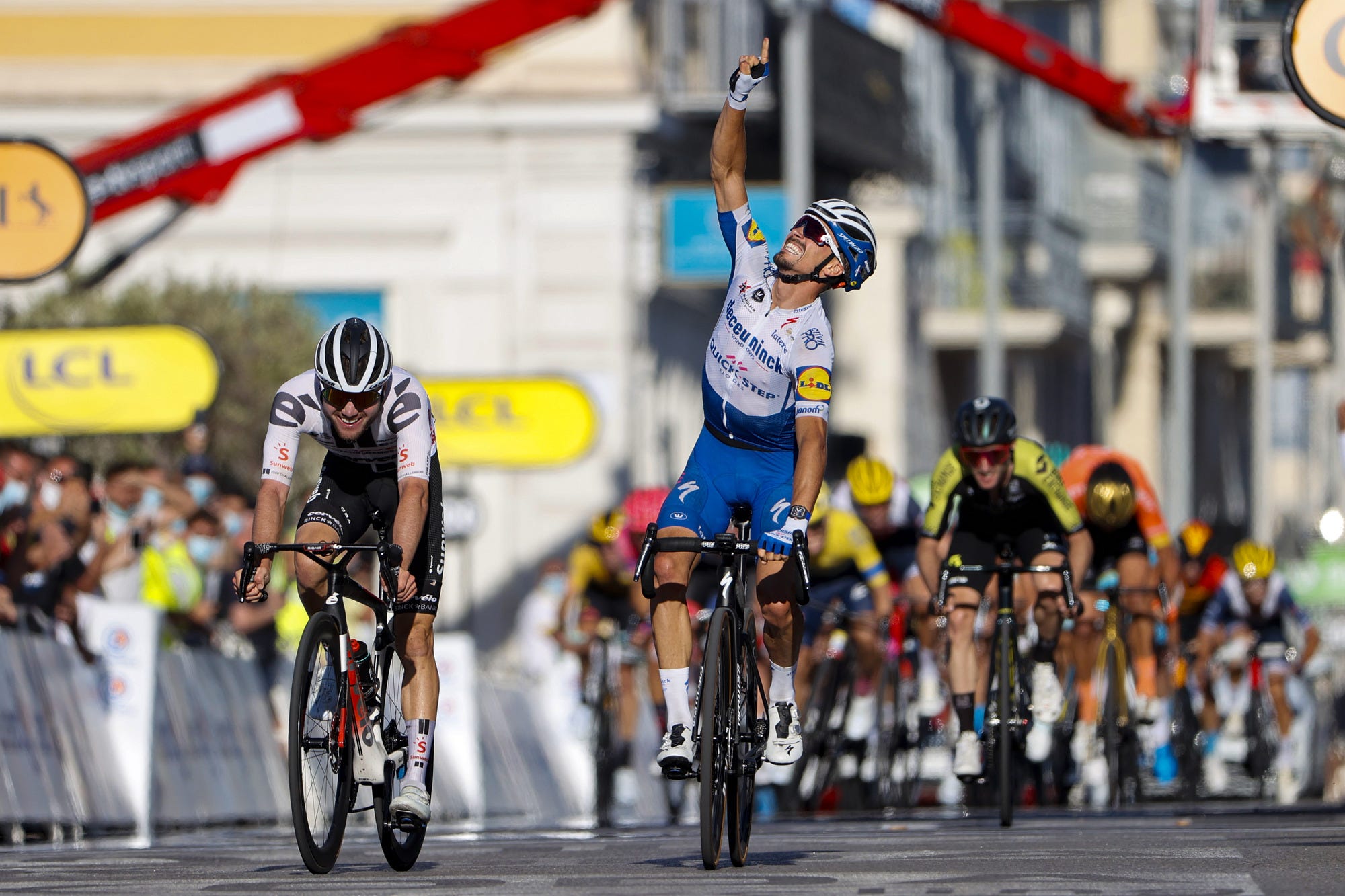
The old Formula 1 track is in a category of one. It’s a commercial venue that stages events for a living, so for it the Tour isn’t a bet at all, it’s diversification (and not a new one at that, having hosted the Paris-Nice twice; in 2014 for a sprint finish won by John Degenkolb, and for the start of the third stage of the 2025 edition). This is an up-tick on an existing marketing strategy for the circuit and the wider Nièvre. Different motive, different risk profile, and far less on the line emotionally than for a village of a few thousand.
The saving grace
However, the scales tip back toward “blessing,” even for the small anxious towns, because of one crucial feature that separates a Tour stage from almost every other mega-event. It leaves nothing behind to maintain. No stadium, no Olympic village, no arena slowly rotting into debt. The same organisers who are gloomy about hosting are careful to note that the Tour demands no large-scale permanent facilities, which means it sidesteps the white-elephant trap that has bankrupted Olympic and World Cup hosts for decades.
And that changes everything. The worst case for Hagetmau or Ussel isn’t ruin; it’s a pricey, chaotic day that didn’t fully convert into lasting trade. The curse, when it comes, is more of a bruise and not a wound.
The verdict
So: a clear blessing for the seven cities and resorts with the infrastructure to turn worldwide exposure into actual revenue, and a limited-downside gamble for the three or four small towns, where the payoff is counted in pride and one unforgettable day far more than on the accounting ledger.
But even those small towns are betting with a safety net the Olympics can never offer. They won’t lose their shirts. At worst, they spend a bit too much on the best party they’ll ever throw (and the headaches that come with that) and for most of these ten, that’s a trade well worth making.
According to a case study from Digne-les-Bains, hosting the finish of a stage in 2005 cost the town 150,000 euros (hosting fee plus organizational costs and technical services), while tourism expenditure due to the event was estimated at ca. 475,000 euros (Desbordes, 2007). https://onlinelibrary.wiley.com/doi/full/10.1111/jors.12658
The Adeupa study estimates that the race on June 26th attracted an additional 52,200 tourists and day-trippers and generated €4.35 million in direct revenue for the Finistère economy. https://www.ici.fr/infos/economie-social/tour-de-france-bretagne-retombees-economiques-1643878538